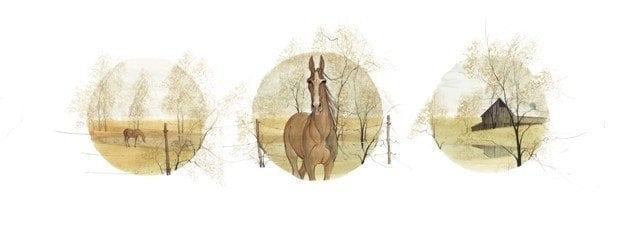
“The Earth at Rest” takes me back to my younger years, as I loved to be able to visit my grandparents farm. It seems that my grandfather always included me in whatever he was doing.
Erith Shoup, my grandfather, loved to farm, and would take us little ones with him while he was out doing what he did best and even along with him while he was hunting for our Thanksgiving meal.
The most memorial time for “The Earth of Rest” was after the winter months where he planned for his spring planting. He not only planned for his fields, but also his many garden beds, which would be full of flowers and vegetables in the spring and summer. He loved to be out in his God’s world, working with the land, but also bringing joy to the people who would stop at his “The Gardens” to purchase flower plants, fresh flowers bouquets, along with the many vegetables he also grew.
Fall was the time to ready the earth for its rest. Grandfather taught me that we must take time to rest after working, but to also reflect on the care of mother earth, and to enjoy what God’s hands have provided for each of us.
As I grew, my grandfather always shared what he was doing and the why, and this alone has helped me love the farm and its life. I loved by grandfather and am so thankful for his love and his love for the earth and what he taught me.
Farming of yesterday was, and farming of today is still the mainstay of life as we knew it. The farmers today, may have ease of larger equipment to use, but the work and the hours are still the same. Up early each morning, and to bed late many nights as it takes many famers to grow not only the food for our country but also the world.
My husband and I have many farm families as friends, and they, in turn are passing their love of Mother Earth to their children for the future generations, just as my grandfather did for me.
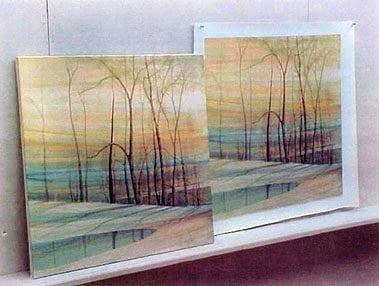
I have been extremely blessed to live on my husbands farm, and to have worked beside him, with the sheep, cattle and hogs that we raised in the past, along with working beside him with the various crops that were raised. We still enjoy the fruits of our labors as we still grow a small plot of vegetables each spring to enjoy during the summer and into fall. While, “The Earth is at Rest”, we rest, waiting for the spring to again bring the seasons of life to life again. Earth at Rest (Small)The Earth at Rest (Medium)
Several years ago I had the opportunity to travel the east coast of Lake Michigan. I was the solo driver with my three young children as my only passengers. As a family, we had been going through some tough times. And often, I found myself being the lone parent left to raise these three trusting little humans. This trip was truly a God send to me. For in it, I found my inner strength through mighty towers that hold the beacon of light. Throughout our travel, I witnessed some of the most breathtaking scenes nature has to offer. Many that are still etched in my memory. And, it was during this trip I became addicted to lighthouses. I found myself mesmerized by these beacons of light that stood at the end of a pier or on land surrounded by huge sharp boulders. Even though I knew they were inanimate objects, questions to them ran through my mind as I stood there gazing at them in wonder… How many lives have you saved because they heeded your warning? How many lives have been lost due to the sharp rocks that lay at your base? How do you withstand the continuous pounding of the waves during storms, and especially in winter, when the water is ice cold and the wind has its chilling bite? How did they build you and who built you? And, do you get lonely standing out there by yourself? It was as though I heard The Beacon whisper an answer to me through the mist of the water as the waves lapped against one of its mighty foundations. “Just as I, the Beacon, stand here alone during the storms, you, too, at times will stand alone being a beacon of light — the beacon of hope for that one lost soul needing to know that someone cares. You might be that only smile they see that puts light in their eyes. This is for what you were made. This is your job. This is your purpose — to share the light. Though the waves may come crashing down upon you, your Maker made you strong to withstand the storms. Your Maker made you strong enough to endure the loneliness. Your Maker made you to shine His light and be kind and forgiving and to always love. Sometimes your light might be the only light that can be seen in the midst of the storm. And, it might be very dim. But, it is there. You have been built on a strong rock that will not let you fall. Have faith in your Maker, as I have in mine.” Silly as it sounds, The Beacon’s words gave me strength to help endure many of the hardships that have come my way in life… both as a single parent and in a career. But this message from The Beacon is not only true for me, it is true for this Great America. For as this world is going through some very strong storms of change, chaos and sadly, much hate, I see our Great America as the Beacon of Light to this world. So many come to this great nation filled with hopes and dreams. We are the beacon of hope for humans all over the world desiring to live in freedom… to prosper… to live in dignity. As these storm waves of hate and chaos are crashing down upon this great nation and trying to destroy the foundation on which it stands, it is imperative that we know and understand the principles on which our nation’s forefathers built it. And, let us not forget those whose lives have been lost protecting our nation’s foundation from being withered away from the continuing crashing waves of destruction. We are the Great America… but to stay great, our foundation must stay strong.
The Artist P. Buckley Moss has a unique perspective of the world. One of the things most fascinating about her (and there are many things) is her remarkable memory for details. If you ask her what inspires her to paint she will tell you that the world is rich with details. I have been to her studios through out the years and seen first hand the sketches on paper, tissues, napkins, envelopes….tiny pieces of visual notes to be expanded upon when she finds herself alone with only brush and canvas.
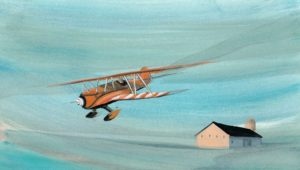
At her recent Barn Show, Pat and I talked about her print,The Barnstormer. Far too young to remember the days when these planes flew around the country, Pat said that over the summer she wanted to be reminded of all the summer vacations gone by, the memories of days long ago, and the vacations that she took with her once small children. “I thought the essay contest would be a fun way to inspire dinner conversations!” she said. I think that it is important to try to figure out how to bring these wonderful conversations back into our now, digital life.
The Importance of Art and Telling Stories
I suppose that we should start by just telling more stories. Somewhere I read that kids today are going to return to the days of caveman drawings with all their dependency on emojis. Now I love a good smiley face as much as anybody, but one of the things I totally agree with Pat on is the “good old dinner-time history lesson-story.” Thinking about my grandchildren and trying to figure out ways to get them to be inspired by art and perhaps write out a story for me. I was wondering what you think about “summer memories and children who speak with smiley faces.”
I have a friend who was telling me that almost every night at her dinner table growing up there would be stacks of Encyclopedias brought out to help bolster some story or event going on that day. I thought that it was quite amusing to think about those large heavy books being passed around over plates of spaghetti (yes, my friend is Italian and not only did they discuss history with dinner, but they got to eat pasta every night too!)
This same friend sent me an essay that I must share. It is about the print, Humpback Rock, and I just loved how one image transported her into some childhood memories that were the highlight of her summers. It got me thinking about my grandchildren and trying to figure out ways to get them to be inspired by art and perhaps write out a story for me. I was wondering what you all were thinking about summer memories and children who speak with smiley faces. Read the essay: Read a great post
Is there hope? If you have found a secret to telling stories at dinner, then please share it with me.
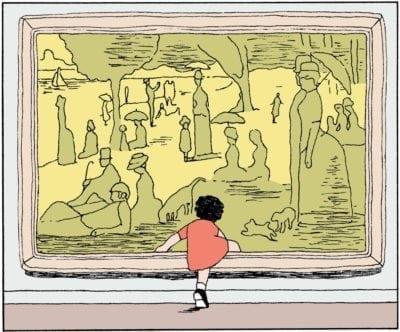
Art is not about “what you see but what it makes others see” ~ Edgar Degas
New York Times, “How Art Makes You Smart”
New York Times, “How Art Makes You Smart”
You are probably wondering why on earth “making others see” something is that important. Well, if you are a parent or teacher, or even a boss leading a young team for that matter, “making others see” is the only way to grow—be it a business or a child into an adult. The human mind is intended to find creative solutions to all sorts of problems. From learning to walk across a room to touch something shiny or to helping a customer find the perfect pair of shoes for their new job: Everything in life presents a problem that needs some kind of solution. Since Degas lived long before the Internet of things, perhaps he was outdated in his thinking. Or was he?
Enter the IPhone
Today we have the most remarkable digital tools at our fingertips to answer anything, at any moment, with laser sharp accuracy. We now have Siri or Google’s Alexa to give us the answers we need, when we need them but is that really going to make us smarter? And not just book smart smarter, but real life “better problem solvers” smarter?
Bill Gates and Steve Jobs gave us the personal computer to make our lives easier and more productive. It was intended to make us efficient, not smarter. So why do we think that giving our children tablets or “Alexa” that we are bettering their lives? Sure, we are speeding up their lives and making it far more entertaining, but are we giving them the tools they need to become smarter, more productive individuals? And what if machines do give us all the solutions to math, science, and engineering, can it really be very helpful when it comes to designing innovative new products or choosing the right spouse?
Introduction of the IPhone
If you look at some of the truly great product innovations of the 20th Century, yes, even including the IPhone, you will see that these creations were usually presented after something else failed to solve a problem. In fact, many times, the resulting innovation came about as some kind of an accident that failed miserably. [Steve Jobs was obsessed with making the IPod more versatile for users, only those turn around dials were not useful for combining it with a device that we could touch. Ask anyone at Apple during the secret years of creating the IPhone and you will see that the process was completely painful and went into a direction not originally intended. The IPhone was an answer, a reluctant and painful answer, to keeping music front and center in the lives of customers. The phone part was an added misery that just happened to pay off and change the entire way we communicate, years ahead of its time, by accident.
Design Matters
As digital devices have filled our lives, becoming smaller, lighter, and easier, we as a society have become more design oriented in our thinking. The technology is important, but the design of things is what drives us to toss out something six months old and replace it for the new. How things look matter to us in a world where data is bombarding our every waking moment. It can’t just be useful, it has to be well-designed and containing attributes that make us feel one way or another. A Harley is a motorcycle, right? Or is it? Those rugged chrome curves are telling everyone that this rider is a rebel of sorts. It isn’t just transportation anymore, it is how things make us feel that matter.
Re-Enter Art
It used to be that teaching children how to draw and paint was part of childhood. Along with skinned knees, covering leaves with brightly colored paint and then stamping them onto crisp white sheets of paper became a rite of passage when returning to school after the long hot summer. Children had sketchpads, colored pencils and crayons in their rooms—and they were shaved down to bottom, rarely new in the box as they are today lying dormant next to coloring books that are rarely used. Creating art has become something “boring” to do when compared with Candy Crush. But all that “boring stuff” of childhood, from days-gone-by, are the elements of truly great American Innovation.
The world of texting
Ask any child psychologist today what they worry about most with the “digital generation” and they will tell you that it is the nuances of our relationships that cannot be understood with emojis replacing our actual human interactions. We humans need to experience actual experiences in order to really integrate them into our lives. Just
picking up that colored pencil and pushing it across the pages of a coloring book actually have a deep correlation to our memory and learning.
Yes, just looking at art can actually change how we think and behave.
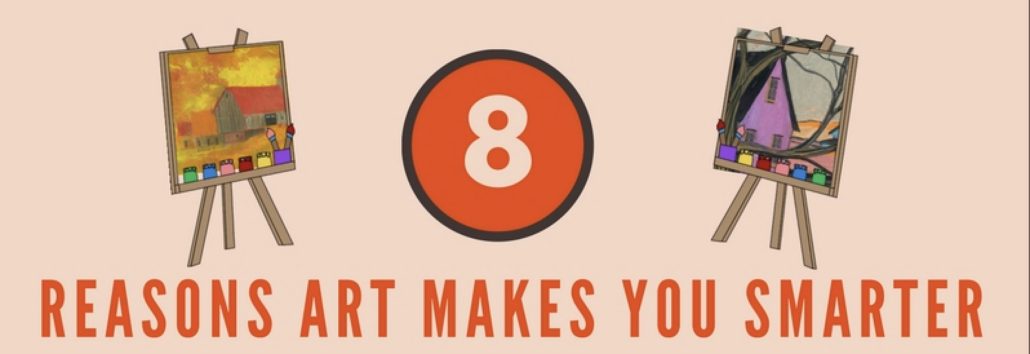
So, let’s jump right into the Eight Reasons Art Makes You Smarter.
Here is a Simple Infographic to summarize the importance of Art [link]
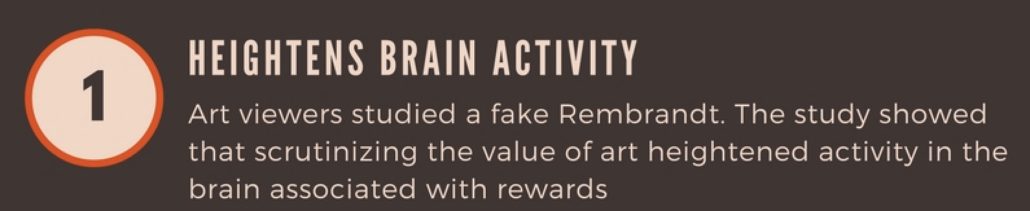
Art Heightens Our Brain Activity. What researchers know is that when we make our brains work harder on things that they are not familiar with—like learning a new language or really scrutinizing the strokes and colors of a piece of art to see if its fake—our brains light up with energy and life giving food that it needs to stay healthy and strong so that we can live a long life of remembering things.
Art Exercises Our Survival Instincts. And who really cares about “Fight or Flight” anymore? We don’t have saber tooth tigers creeping up behind us in a cave, so what does it really matter that art makes those impulses stronger? Well think of your children in the play park for a moment. Someone comes up to them they do not know and starts a conversation that just might lead to a trip to their car. With all the digital confusion that movies and games fill our lives with, how is a child to know what real fear feels like? Art is one of those mediums that is “real” and deeply involved. It is also a place to share and learn without feeling like you are lecturing all the time. Art evokes questions because it cannot be swiped off the page or “x’d” out when it isn’t interesting anymore. Art is something to see and feel.
Art Develops Core Skills in Children. I do not think there is a teacher on the planet that would argue that holding a pencil and moving it along a surface isn’t a key element of learning to function as a child. Scientists can show you exact connections between holding that pencil and the regions of the brain that are activated by pressing it against the paper. A child must work through how to adequately hold a pencil properly in order to make it work as intended. That takes skills that turn us into productive adults one day. Taking away our ability to hold these tools in our hands and create works of art—as we intend them to look—removes a key process from our childhood. [The same goes for adults too! Just getting all the notes via PDF is not the same as taking notes– and studies are pretty clear that our ability to doodle is the brains way of resolving complex problems in our lives.] Art helps all of us develop core skills.
Art Enhances Well Being. If you have ever had the privilege to go to a Veterans Administration Art Therapy class you will see how incredibly powerful the process of art can transform a person’s stress level into the direction of peace. Our brains are a complex and very misunderstood part of our bodies. Since we only use a small portion of our brains and are just now understanding how this magnificent organ works, how can we doubt the power of art upon the complex thoughts and experiences we have? Our eyes capture trillions of pieces of data and color every single second and sitting down to draw a fruit bowl with its difficult shapes and intricate colors is one way to calm our thoughts and focus them on the task at hand—healing ourselves. Just see what happens when you ask a toddler in a rage to color. Sure, at first those crayons may end up as collateral damage, but if you make that part of the process of being stressed out, eventually they will find a way to express their frustration in ways that their language ability and maturity cannot.
Art Makes You More Attentive. Number 5 is following the art therapy because it is all about habit and process. The more children are exposed to art and participate in activities in it, the more they focus on it and other things that need to be learned and seen. TV, digital games, IPhone videos are all moving quickly, feeding our attention span and reducing it to what scientists say is now only a mere 6 seconds! And that goes for all of us. If we are not entertained in six seconds we switch or click out in boredom. I know you have all seen the one-year-old child trying to swipe at a magazine page. Funny as it was there is a lesson for all of us in it. Being able to hold our attention on things that matter in life will make us more successful no matter what our age. Appreciating art, with all its silence and space is just one really fun way to do that hard task.
Art Helps You See The World Differently. There is this really cool brain doctor in Southern California named Dr. Amen. He does brain imaging so many light years into the future that someday we will use the color mapping of our brains to help us become better adults. But for now, just know that when our brains are activated by something – a thought, an image, a smell, our brains have corresponding areas that light up and become stronger, improving whatever part of our body that this portion of the brain controls. Experiencing art is like having your brain go to the gym, only there is no sweating and puffing involved. Art give us just incredible images to activate our memories or thoughts, and help us to see the world differently.
Art Increases Your Creativity. Many years ago, I brought my two young children into the London Museum of Art. We entered a large gallery that had a painting covering most of the wall on the backside of the room. It was absolutely huge as paintings go, so of course it was the very first thing noticed as you entered. I can only imagine how large it was for a 4 and 5-year-old child. But what was even more extraordinary for them was this very large, naked man happened to bear a striking resemblance to someone that was near and dear to their hearts: Santa Clause.
Well, as you can only imagine, they broke free from our hands and ran right up to the painting laughing and shouting, “Santa Clause is naked.” In our embarrassment, we hurried out of the gallery and went back outside into the cold where a very interesting discussion about how Santa Clause took baths took place. They were very curious if it was possible for him to stay warm in the bathroom at the North Pole while he was in the tub. On the surface it was an insignificant, albeit an embarrassing adult event, but for our children, they often referred to Santa while taking future baths realigning their behavior in that moment just in case he was paying attention with the “naughty and nice list.”
Art Helps Us Find Meaning. I don’t think anyone can doubt the phrase “beauty is in the eye of the beholder.” What our eyes see and how our brains and personal experiences interpret that “seeing” is something that is uniquely special to the viewer. Children are viewing movies, cartoons, and video games and subconsciously finding meaning in their own lives every day. They view their parents sitting at dinner with their phones in hand and even a small infant begins to understand that this small container of light is something very, very valuable: even more valuable than their gurgling sounds many times.
Our world contains many beautiful images that make us feel one way or another. Art is one of those experiences that can make you squirm, or laugh, or feel sad when it reminds you of something from a long
time ago. Adding up all the reasons here that art makes us smarter people, why wouldn’t we want to share it with our children every day?
Within one piece of art above the kitchen table can be a story of childhood, or a history lesson, or the process of how eggs get into the cartons at Trader Joes. There can be discussions on colors and moments of clarity about how a person really feels about something or someone. Art is intended to make us think and feel and now you know that it also has the wonderful benefit of helping to making us smarter too.
So, find a piece of art in this special This Great America Summer of Art Collection and write out your favorite summer memory. Share it with your family, and then share it with us for a chance to win a very special limited edition Giclee print of the Barnstormer, painted by American Artist, P. Buckley Moss. Learn how to enter here. And if you don’t know what a ‘Barnstormer” is then click here to learn more about their wonderful history and adventure.
Blogger and Digital Marketer, Maria Bereket works with all types of businesses to help them bridge the gap of Digital Social Media Marketing. She has had the pleasure of working with the art dealers of American Artist, P. Buckley Moss and often incorporates the important lessons educators and psychologists on the importance of art in development of children’s creativity and intelligence. ”Just viewing art can have an important effect on creativity and attention of both children and adults.” Says Bereket. “Studies show that sharing art and just hanging it in our homes can have a profound effect on innovation.” Her company, Design Bear Marketing values education and innovation in all things digital and marketing. Connect with her on Twitter @mbear88or Website
A child’s room is a place of creativity. Why not fill it with art?
It’s one of those things that probably only your grandparents remember. Popular in the Roaring Twenties, Barnstorming thrilled audiences in America with stunts and circus type of flying that included such greats as Charles Lindbergh and the Wright Brothers. Looking at this child’s bedroom, I am reminded how fascinated I was with Charles Lindbergh as a child, spotting him once in an encyclopedia on my parent’s bookshelf. It would have led me from the “L” book to the “B” book (for barnstormer) and then probably through several other learning adventures that didn’t quite feel like I was learning anything at all. But learn I did—history, adventure, art, and the creative stories of days gone by. Today I am reminded that children need such things in their lives…pieces of creative input that allow their imaginations to soar.
Barnstormers in the 1920’s
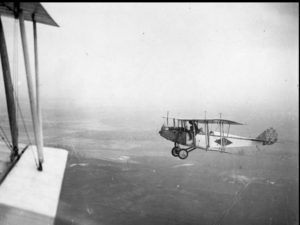
But I digress. Let’s get back to the Barnstormer. Apparently, following WWI, there was such an abundance of airplanes and airman who flew the flying machines that companies and pilots grew into a big business of entertainment as the Roaring Twenties took hold. It became a great way to make a living with pilots traveling in a Barnstorming circuit, wing walking, parachuting, and performing stunts in the air.
And just think about the twenties in America for a minute. Women didn’t work, men were the leaders of nations and always had the final word at home. But for Barnstormers, it wasn’t only former military veterans who took to the skies; there were woman and other minorities who thrilled audiences with their skills as barnstormers.
Bessie Coleman
One such notable lady was named Bessie Coleman. She wasn’t just a woman, but the first woman and African American civil aviator to hold a pilot license. For Bessie, her family was in the sharecropping business in Texas so it was a natural interest of hers to learn to fly, but remember it was the 1920’s. No matter her interests, she had to go all the way to France to learn to fly since there were no flight schools in America for women. Bess became an inspiration because she “not only thrilled audiences with her skills as a barnstormer, but she also became a role model for women and African Americans. Her very presences in the air threated prevailing contemporary stereotypes. She also fought segregation when she could by using her influence as a celebrity.” (PBS 2015)
I guess that people across America were thrilled with Barnstormers no matter who they were because they were all looked at as fun entertainment in a world that had no televisions or Internet to delight or distract them. This group came to town as adventurers and daredevils so it didn’t matter who was flying around doing stunts in the air, in fact, it might have been a greater thrill to think of women flying above the crowd.
“The Barnstormers are coming!”
I heard that the fun began as soon as the grumbling engines could be heard as they approached a town. Everyone, and in many cases, it meant the entire town, would shut down as all the people flocked to see where they would land. People lined up to ask how much it would cost to take a trip up in the air. Children begged for rides and parents hoped there would be enough money in the coffee tin for everyone to feel the thrill of flight! Most people had never seen an airplane in the 1920’s, so the
whole event would have been a daylong celebration that was the most magical and exiting part of their entire year!
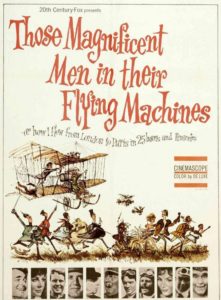
1965 Film
One fun depiction of the life of the Barnstormer was in the 1965 film, Those Magnificent Men in Their Flying Machines. It was a typical adventure of how pilots swarmed together, in this case to enter a race, competing against one another in a comedic series of stunts. Barnstorming found a bit of a revival after the film came out and today you can still find adventure tours who fly for fun. But Barnstormers are a rare site indeed. More likely, you can look up from the beach or baseball game to see a Barnstormer plane carrying large banner advertising for some local business. The roar of the plane’s engine and flapping wings is still a sure way to get you to look above.
The Engine View
Today it is still possible to fly with a Barnstormer and enjoy the view of landscape from an open cockpit. Unlike a commercial aircraft, a passenger can feel the wind and hear the engine as it grumbles its way across the sky. It is spectacular and breathtaking to fly over the countryside and perhaps do a flip or two!
These flips, or Aerobatics, are the maneuvers that you might expect to see from the stunt pilots who perform dangerous spins in the air. There are loops and the barrel rolls, stall turns and wingovers, and sometimes aerialists will perform daredevil stunts like switching planes in midair. Even today, these tricks and stunts are fun to experience if your stomach can handle it of course. Most flights are very smooth and graceful. If you are lucky enough to see a “wing walker” thrill audiences from the ground you can see them wave from air while hanging from their ankles below the bottom wing.
“Barnstormer” Limited Edition Giclee by P Buckley Moss
The special history of the Barnstormer is one that is truly an American delight. One such great moment is through a newly released limited edition Giclee print, Barnstormer, painted by iconic American Artist, P. Buckley Moss. Not only did she want to share an adventurous time in American history but her love of education helped to create a wonderful summer essay contest that both adults and children can enjoy.
This Great America Summer of Art Essay Contest kicks off a summer of fun and remembrances of the special places and moments in all of our lives; and one lucky winner over Labor Day weekend will win this very special Barnstormer print (signed and personalized.) Enter your 500-1000-word memory of summer by first browsing through a selection of qualifying art pieces painted by this beloved American Artist. Each print depicts the wonders of summer through her painted inspiration. I am sure there is something that you can remember and recall for that special summer in your life; and then have an opportunity to win and take home a special part of our great American History, the Barnstormer.
Blogger and Digital Marketer, Maria Bereket works with all types of businesses to help them bridge the gap of Digital Social Media Marketing. She has had the pleasure of working with the art dealers of American Artist, P. Buckley Moss and often incorporates the important lessons educators and psychologists on the importance of art in development of children’s creativity and intelligence. ”Just viewing art can have an important effect on creativity and attention of both children and adults.” Says Bereket. “Studies show that sharing art and just hanging it in our homes can have a profound effect on innovation.” Her company, Design Bear Marketing values education and innovation in all things digital and marketing. Connect with her on Twitter @mbear88 or Website
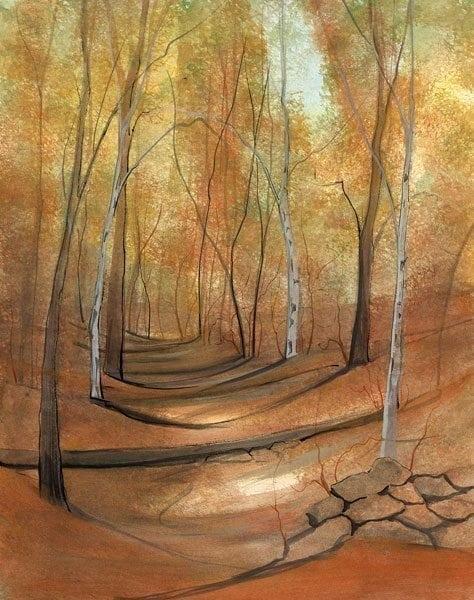
I received this article today from a friend. Seeing this art print, “Trail to Humpback Rock” by P Buckley Moss, was her inspiration for writing. The art took her back to a time when she and her family shared such pleasant memories of their yearly vacation; a time she holds dear.
“This Great America Summer of Art”
Title: Trail to Humpback Rock
The minute I saw the print, Trail To Humpback Rock, I smiled. Not because I had been to Humpback Rock but because the print, so beautifully painted by P. Buckley Moss, had captured a summer memory so vividly that it transported me back in time.
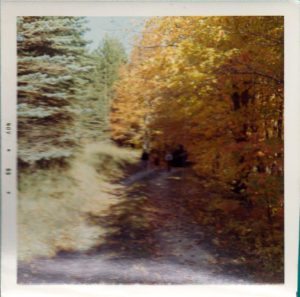
As only a little kid can imagine, my mind raced back 40+ years to the long, unfinished dirt road of our summer cottage. Every summer our family drove five hours “up north” to the tiny town of Ellsworth. It wasn’t even on a map (or not on any modern day map.) My parents had purchased thirty acres of land on Lake 26 from the estate of Dr. Secore. He was a WWI veteran who loved living in the woods. He built a real log cabin with a huge stone fireplace, and the long, one mile road that led through the trees, pass the apple orchards, eventually brought you out to a clearing where a small ice house and big log cabin sat. It was our summer get-a-way!
There were four of us kids and hoards of visiting cousins who loved that road. Always covered in brightly colored leaves and filtered sunlight, the trail was overflowing with the sounds of branches swaying alongside chirping birds. You could tell that it was a trail created from some old walking pathway to the lake. Fallen tree trunks became part of its roadway and there were so many trees surrounding it—and so very tall—that you could barely see the blue of the sky above it. It was a challenge to get our station wagon down that path! The dog would bark all the way down and we kids would cover our eyes whenever we came to a particularly narrow part of the path where we thought the car might tumble over. The “mile driveway” to the cottage was our magical reminder that we had arrived in paradise. It seemed to take forever to navigate it’s rough and winding path to the cabin and the lake, but it was always filled with sunlight and golden leaves. It was a secret passageway to our summer of adventure.
The path started from the roadway and then dipped down into a cathedral of trees that bent over, covering the sky. On the warmest of summer days you could always walk up the road through the densest part of trail and feel a bit chilly compared to the heat of the summer. During the daylight hours we imagined hiking through the Amazon, or scouting for animals, or just walking with our grandmother to the “clearing” space that looked exactly like the Trail to Humpback Rock.
As night fell upon the road we never ventured far. It was too dark, too scary, and most likely had a raccoon or two walking down its long path. No matter where I am, or how old I get, there is no better memory than our summers at the cottage and our adventures on the long, golden, leaf covered path of our look-alike Trail to Humpback Rock.
Somehow, P. Buckley Moss was able to capture this most magical time of my childhood – summer vacation! In her art there is love and the beauty of remembering the most important place in my heart.
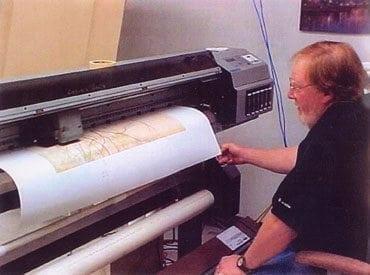
Offset lithograph printmaking requires a commitment to printing the entire edition at one time. The printing center takes possession of an edition, stores the edition until the last prints are sold and are constantly tracking what remains of any edition in their inventory. Imagine the storage issue with such an active publisher! With the digital printers of today, when you have your own printer, you can print each print as needed while always keeping count of where the edition stands and how many prints will be needed to print the entire edition.
A plus to the new Giclee printing technique is that if Pat has a desire to see her image on a larger scale, any image could be sized to print larger and the larger prints would be counted as the next number to be printed. Perhaps a collector finds an image they love but needs that image larger to hang in an intended space. While the price will reflect the costs or a larger print, the process of printing a different size of an image is not possible. We have made progress with the digital age in a reproduction of art allowing a greater audience to enjoy unique works of art and feel confident that their investment will grow over time.
An Artist’s Proof is just that: an image made for the artist by the printer. AP’s, Artist Proofs, are usually produced in smaller numbers than the general edition, are marked as AP’s, and may be signed and numbered as well. Because the number of Artist Proofs is smaller and because the APs are “closer to the artist’s hand,” signed APs tend to be more valuable than the prints of a signed and numbered limited edition.
In the early days of printmaking, printer’s plates would wear down over time. Because of this, the first prints off the printing press were the highest quality and were designated “artist’s proofs”. The artist’s proofs were considered to be the best prints within the edition and often the artist kept them.
Technology has changed quite a bit since the early days of printmaking. Today, all prints within a run of offset lithographic prints or Giclee prints will be identical in quality. However, the tradition of having a special edition within the edition has stuck around. Today the value of owning an artist’s proof does not relate to quality, it relates to the importance of owning a rare portion of an edition. Most offset lithographic editions and Giclee editions include less than 20 percent artist’s proofs. Because the art world loves rarity and since there are fewer artist’s proofs than regular prints, they are preferred by many collectors.
A bit of history with Moss Artist: In the early years, (1974-1984) of publishing Moss works, the artist proofs were an essential part of planning each edition. The proofs were noted with an AP on each of the proofs but were not numbered. The reasoning could have been an issue with the process, although to look at each proof in my collection, you can’t really see significant differences in the prints. During those years, the proofs were actually used to determine how the edition was printed and the artist would approve or disapprove until the printing was an expression of what she intended the print to be.
The process of printing has become so automated and precise that colors may be tested and approved but the artist proofs offered for sale look exactly like the edition and we the entire edition of proofs is held by the artist in her private collection until she agrees they may be sold. Think of the proofs of today as being a tiny edition of twenty-five, signed and numbered prints, within any given edition, considered the cream of the edition and available for sale at the artist’s discretion. P Buckley Moss artist proofs are typically two and one-half to three times the value of any print from the matching edition. The line of value progression would be Original work, Artist Proof, Print. The perfect collection would be a collection containing an array of all of the categories in which the artist has published. Some collectors are only interested in original works while other art collectors seek a mix of all mediums.
Don’t let price determine your choice of a print. Price is normally determined by the size and complexity of the image. We all know that it is the artist behind the brush who makes the art and her talent for putting to paper the way she sees the world is what draws us to love the art. In addition, if the price is a determining factor, we have a lay-a-way plan which will make the process of purchasing an easier way to have exactly the art you have in mind.

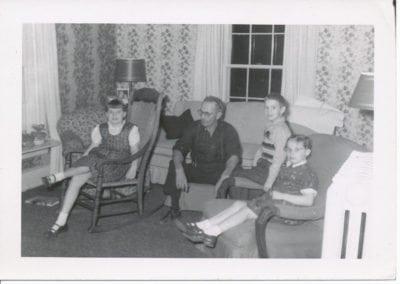
 It seems that my grandfather always included me in whatever he was doing.
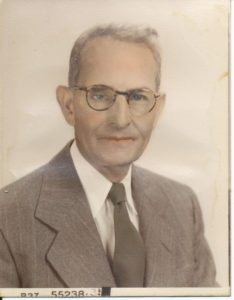 bringing joy to the people who would stop at his “The Gardens” to purchase flower plants, fresh flowers bouquets, along with the many vegetables he also grew.
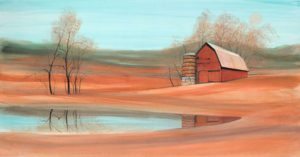 and to have worked beside him, with the sheep, cattle and hogs that we raised in the past, along with working beside him with the various crops that were raised. We still enjoy the fruits of our labors as we still grow a small plot of vegetables each spring to enjoy during the summer and into fall. While, “The Earth is at Rest”, we rest, waiting for the spring to again bring the seasons of life to life again. Earth at Rest (Small) The Earth at Rest (Medium)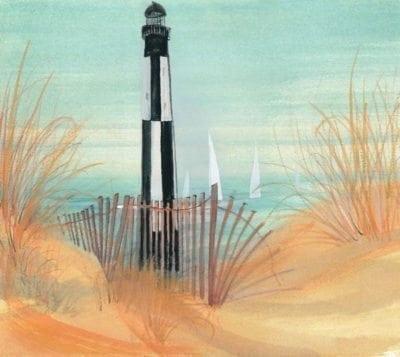
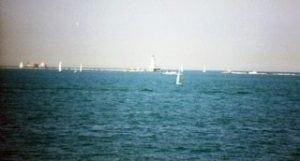 Many that are still etched in my memory. And, it was during this trip I became addicted to lighthouses. I found myself mesmerized by these beacons of light that stood at the end of a pier or on land surrounded by huge sharp boulders. Even though I knew they were inanimate objects, questions to them ran through my mind as I stood there gazing at them in wonder… How many lives have you saved because they heeded your warning? How many lives have been lost due to the sharp rocks that lay at your base? How do you withstand the continuous pounding of the waves during storms, and especially in winter, when the water is ice cold and the wind has its chilling bite? How did they build you and who built you? And, do you get lonely standing out there by yourself? It was as though I heard The Beacon whisper an answer to me through the mist of the water as the waves lapped against one of its mighty foundations. “Just as I, the Beacon, stand here alone during the storms, you, too, at times will stand alone being a beacon of light — the beacon of hope for that one lost soul needing to know that someone cares. You might be that only smile they see that puts light in their eyes. This is for what you were made. This is your job. This is your purpose — to share the light. Though the waves may come crashing down upon you, your Maker made you strong to withstand the storms. Your Maker made you strong enough to endure the loneliness. Your Maker made you to shine His light and be kind and forgiving and to always love. Sometimes your light might be the only light that can be seen in the midst of the storm. And, it might be very dim. But, it is there. You have been built on a strong rock that will not let you fall. Have faith in your Maker, as I have in mine.” Silly as it sounds, The Beacon’s words gave me strength to help endure many of the hardships that have come my way in life… both as a single parent and in a career. But this message from The Beacon is not only true for me, it is true for this Great America. For as this world is going through some very strong storms of change, chaos and sadly, much hate, I see our Great America as the Beacon of Light to this world. So many come to this great nation filled with hopes and dreams. We are the beacon of hope for humans all over the world desiring to live in freedom… to prosper… to live in dignity. As these storm waves of hate and chaos are crashing down upon this great nation and trying to destroy the foundation on which it stands, it is imperative that we know and understand the principles on which our nation’s forefathers built it. And, let us not forget those whose lives have been lost protecting our nation’s foundation from being withered away from the continuing crashing waves of destruction. We are the Great America… but to stay great, our foundation must stay strong.












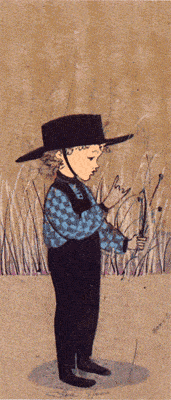
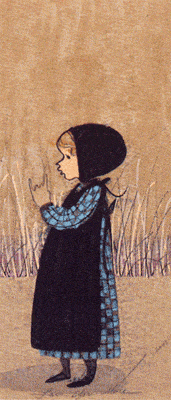 An Artist’s Proof is just that: an image made for the artist by the printer. AP’s, Artist Proofs, are usually produced in smaller numbers than the general edition, are marked as AP’s, and may be signed and numbered as well. Because the number of Artist Proofs is smaller and because the APs are “closer to the artist’s hand,” signed APs tend to be more valuable than the prints of a signed and numbered limited edition.