Jun 03, 2017
Free Spirit (Giclee)

Don’t let price determine your choice of a print. Price is normally determined by the size and complexity of the image. We all know that it is the artist behind the brush who makes the art and her talent for putting to paper the way she sees the world is what draws us to love the art. In addition, if the price is a determining factor, we have a lay-a-way plan which will make the process of purchasing an easier way to have exactly the art you have in mind.

Jun 03, 2017

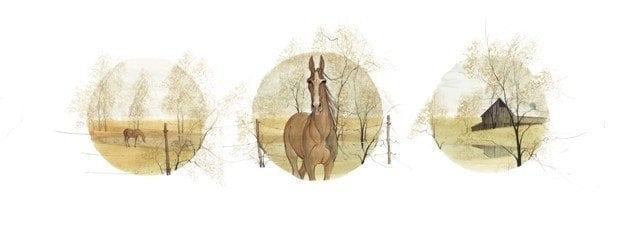
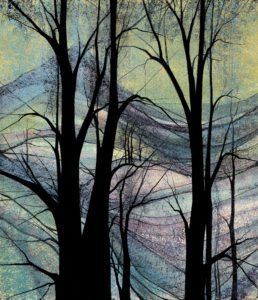
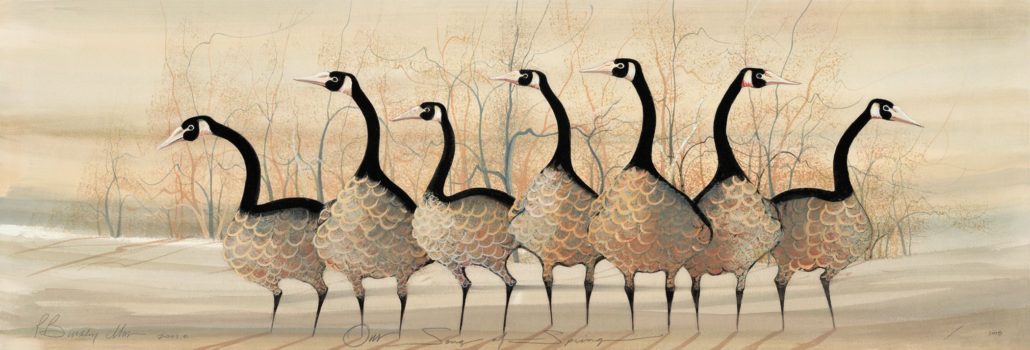
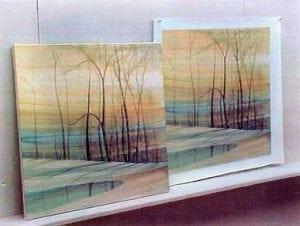
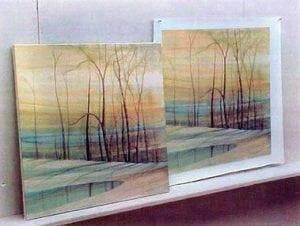
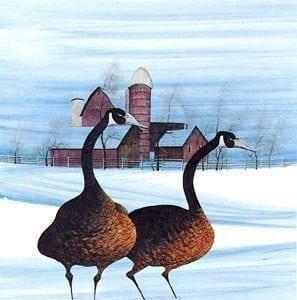
The question of how to choose a print typically does not come up in regards to the work of P Buckley Moss. In our gallery inventory, we house over 2100 different pieces of Moss art, which encompasses every category of her work. Individual collectors are simply drawn to the subject matter that “grabs” them—and this should be your guide as well. Usually, the feeling evoked from Moss works is so strong, one knows after a short time of browsing our gallery what they are drawn to. Some people love the signature geese and others find the cat images attract them the most. Other potential collectors love her signature trees; a dance in calligraphy to behold. Still others love the simplicity of the rural scenes with familiar barns and landscapes. The choice is yours. Possibilities are endless when putting together a grouping or choosing a stand along piece for any room or any space.

During the selection process, pick something you like first and foremost. Don’t worry about how well it will rank on the secondary market after the edition is sold out, if it is selling out quickly or if it is viewed and loved the same by others as it is by you. If you have a connection to the art piece, if it “speaks” to you and you can picture it in your home then that is the print you should choose. If the art gives you peace and you know you will enjoy it every day, then choose that print to add to your collection. Have your art professionally framed to protect your investment.

As with all art purchases, you should speak with the professionals at the gallery with questions you might have concerning the images you choose. Ask questions about the paper, the numbering and by all means, let us talk with you about framing techniques recommended for the preservation of your art piece. Please don’t pay a good price for a piece of collectible art then go unarmed to a “frame shop” and trust their process of framing without knowing the right questions to ask. A good gallery wants to build relationships with their clients for the long term. Their passion for the art will match the enthusiasm you feel toward your new art choice. Your expectations of the experience must be fulfilled as you are guided through the process of choosing art for your home.

Jun 03, 2017

There usually is no standard amount in an edition. As few as 1 or 3, or as many as 1000 or more. Reflect on how the volume will affect the value of your chosen art piece and consider that the smaller the edition, the higher price will be asked (and also sold should you decide to sell your own piece at some point.). In the art world, it is assumed the lower the number of prints in an edition, the more valuable and collectible the editions are likely to be. The number game is rather jaw-dropping if you should be lucky enough to find a very low numbered print, but in reality, the image is what the collector admires and the number, be it a very low number, is just that; a very low number. I have not witnessed a higher price asked for one number in an edition over another number.

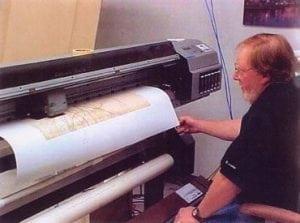
   In the early days of printing, prints could vary a bit from one print to the next but even when most of the P Buckley Moss print editions were printed as offset lithographs, or photographic reproductions of the original watercolor, the images didn’t vary and each print of the edition looked the same. Now, in the digital age, all but the oversized images by Moss are printed as giclee editions; a process of reproduction of the original watercolor using software and state of the art printers that produce more vivid colors, which make for amazingly detailed and vibrant prints.

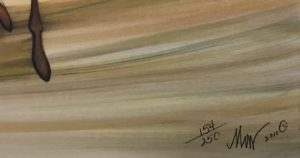
A limited edition is normally hand signed and numbered by the artist e.g. 50/100 while the artist proofs are numbered AP 1/25, 2/25 etc. Pat Moss used to spend countless hours signing each print of every edition until the action caused problems with her wrist and her medical team asked her to make a decision; “Do you want to sign print editions or do you want to paint?” It was then that the decision was made in the mid-1990’s to secure a matrix of Pat’s signature by which all her print editions have been signed going forward. At this writing, Pat still has gallery shows where she will spend hours talking with collectors and signing her work by hand either on the print paper or on the glass of framed pieces. Her signature is an art all its own.

Limited edition prints have been standard in printmaking since the nineteenth century. Today, limited editions can be found in a series of as many as 2 or 1000. Limited Editions should be distinguished from the original; they should be carefully produced directly from the original work and printed under the artist’s supervision. Depending on the issue and the dealer, often Limited Edition prints will include a Certificate of Authenticity, either signed by the artist or the dealer.

For the purpose of this post, we’ll be speaking with reference to signed and numbered, limited edition prints published by American artist, P Buckley Moss. Given today’s publication, smaller editions of her work are more common. Where once Moss edition sizes were almost always set at one thousand prints with twenty-five signed and numbered artist proofs, most limited editions printed today by Moss are more in the range of two hundred and fifty signed and numbered prints with twenty-five signed and numbered artist proofs. Some editions will print as high as five hundred signed and numbered prints and 25 signed and numbered proofs per edition but this is not the norm.

Jun 03, 2017

What Every New Art Collector Needs To Know

Giclee Print Making: Production Of An Edition

Limited edition prints have been standard in printmaking since the nineteenth century. Today, limited editions can be found in a series of as many as 2 or 1000. Limited Editions should be distinguished from the original; they should be carefully produced directly from the original work and printed under the artist’s supervision. Depending on the issue and the dealer, often Limited Edition prints will include a Certificate of Authenticity, either signed by the artist or the dealer.

  For the purpose of this post, we’ll be speaking with reference to signed and numbered, limited edition prints published by American artist, P Buckley Moss. Given today’s publication, smaller editions of her work are more common. Where once Moss edition sizes were almost always set at one thousand prints with twenty-five signed and numbered artist proofs, most limited editions printed today by Moss are more in the range of two hundred and fifty signed and numbered prints with twenty-five signed and numbered artist proofs. Some editions will print as high as five hundred signed and numbered prints and 25 signed and numbered proofs per edition but this is not the norm.


WHAT DO THE NUMBERS MEAN?

There usually is no standard amount in an edition. As few as 1 or 3, or as many as 1000 or more. Reflect on how the volume will affect the value of your chosen art piece and consider that the smaller the edition, the higher price will be asked (and also sold should you decide to sell your own piece at some point.). In the art world, it is assumed the lower the number of prints in an edition, the more valuable and collectible the editions are likely to be. The number game is rather jaw-dropping if you should be lucky enough to find a very low numbered print, but in reality, the image is what the collector admires and the number, be it a very low number, is just that; a very low number. I have not witnessed a higher price asked for one number in an edition over another number.

   In the early days of printing, prints could vary a bit from one print to the next but even when most of the P Buckley Moss print editions were printed as offset lithographs, or photographic reproductions of the original watercolor, the images didn’t vary and each print of the edition looked the same. Now, in the digital age, all but the oversized images by Moss are printed as giclee editions; a process of reproduction of the original watercolor using software and state of the art printers that produce more vivid colors, which make for amazingly detailed and vibrant prints.

A limited edition is normally hand signed and numbered by the artist e.g. 50/100 while the artist proofs are numbered AP 1/25, 2/25 etc. Pat Moss used to spend countless hours signing each print of every edition until the action caused problems with her wrist and her medical team asked her to make a decision; “Do you want to sign print editions or do you want to paint?” It was then that the decision was made in the mid-1990’s to secure a matrix of Pat’s signature by which all her print editions have been signed going forward. At this writing, Pat still has gallery shows where she will spend hours talking with collectors and signing her work by hand either on the print paper or on the glass of framed pieces. Her signature is an art all its own.

HOW TO DO I CHOOSE A PRINT?

The question of how to choose a print typically does not come up in regards to the work of P Buckley Moss. In our gallery inventory, we house over 2100 different pieces of Moss art, which encompasses every category of her work. Individual collectors are simply drawn to the subject matter that “grabs” them—and this should be your guide as well. Usually, the feeling evoked from Moss works is so strong, one knows after a short time of browsing our gallery what they are drawn to. Some people love the signature geese and others find the cat images attract them the most. Other potential collectors love her signature trees; a dance in calligraphy to behold. Still others love the simplicity of the rural scenes with familiar barns and landscapes. The choice is yours. Possibilities are endless when putting together a grouping or choosing a stand along piece for any room or any space.


During the selection process, pick something you like first and foremost. Don’t worry about how well it will rank on the secondary market after the edition is sold out, if it is selling out quickly or if it is viewed and loved the same by others as it is by you. If you have a connection to the art piece, if it “speaks” to you and you can picture it in your home then that is the print you should choose. If the art gives you peace and you know you will enjoy it every day, then choose that print to add to your collection. Have your art professionally framed to protect your investment.

As with all art purchases, you should speak with the professionals as the gallery about questions you might have concerning the images you choose. Ask questions about the paper, the numbering and by all means, let us talk with you about framing techniques recommended for the preservation of your art piece. Please don’t pay a good price for a piece of collectible art then go unarmed to a “frame shop” and trust their process of framing without knowing the right questions to ask. A good gallery wants to build relationships with their clients for the long term. Their passion for the art will match the enthusiasm you feel toward your new art choice. Your expectations of the experience must be fulfilled as you are guided through the process of choosing art for your home.

Don’t let price determine your choice of a print. Price is normally determined by the size and complexity of the image. We all know that it is the artist behind the brush who makes the art and her talent for putting to paper the way she sees the world is what draws us to love the art. In addition, if the price is a determining factor, ask if there is a lay-a-way plan, which will make the process of purchasing an easier way to have exactly the art you have in mind.

WHAT IS AN ARTIST’S PROOF?

An Artist’s Proof is just that: an image made for the artist by the printer. APs are usually produced in smaller numbers than the general edition, are marked as APs, and may be signed and numbered as well. Because the number of Artist Proofs is smaller and because the APs are “closer to the artist’s hand,” signed APs tend to be more valuable than the prints of a signed and numbered limited edition.

In the early days of printmaking, printer’s plates would wear down over time. Because of this, the first prints off the printing press were the highest quality and were designated “artist’s proofs”. The artist’s proofs were considered to be the best prints within the edition and often the artist kept them.

Technology has changed quite a bit since the early days of printmaking. Today, all prints within a run of offset lithographic prints or Giclee prints will be identical in quality. However, the tradition of having a special edition within the edition has stuck around. Today the value of owning an artist’s proof does not relate to quality, it relates to the importance of owning a rare portion of an edition. Most offset lithographic editions and Giclee editions include less than 20 percent artist’s proofs. Because the art world loves rarity and since there are fewer artist’s proofs than regular prints, they are preferred by many collectors.


   A bit of history with Moss Artist: In the early years (1974-1984) of publishing Moss works, the artist proofs were an essential part of planning each edition. The proofs were noted with an AP on each of the proofs but were not numbered. The reasoning could have been an issue with the process, although to look at each proof in my collection, you can’t really see significant differences in the prints. During those years, the proofs were actually used to determine how the edition was printed and the artist would approve or disapprove until the printing was an expression of what she intended the print to be.


The process of printing has become so automated and precise that colors may be tested and approved but the artist proofs offered for sale look exactly like the edition and the entire edition of proofs is held by the artist in her private collection until she agrees they may be sold. Think of the proofs of today as being a tiny edition of twenty-five, signed and numbered prints, within any given edition, considered the cream of the edition and available for sale at the artist’s discretion. P Buckley Moss artist proofs are typically two and one-half to three times the value of any print from the matching edition. The line of value progression would be Original work, Artist Proof, Print. The perfect collection would be a collection containing an array of all of the categories in which the artist has published. Some collectors are only interested in original works while other art collectors seek a mix of all mediums.

PRODUCTION OF AN EDITION

Offset lithograph printmaking requires a commitment to printing the entire edition at one time. The publisher takes possession of the edition, stores the edition until the last prints are sold and they are constantly tracking what remains of any edition in their inventory. Imagine the storage issue with such an active publisher! With the digital printers of today, when the publisher has their your own printer, they can print each print as needed while always keeping count of where the edition stands and how many prints will be needed to print the entire edition.

A plus to the new printing technique, Giclee printing, is that if Pat has a desire to see her image on a larger scale, any image could be sized to print larger and the larger prints would be counted as the next number to be printed.  Perhaps a collector finds an image they love but needs that image larger to hang in an intended space. While the price will reflect the costs of a larger print, the process of printing a different size of an image is now possible. We have made progress with the digital age in the reproduction of art allowing a greater audience to enjoy unique works of art and feel confident that their investment will grow over time.


#LimitedEditionArt #PBuckleyMossArt #ArtCollector

Art Images:

1. Mountains in Spring. Image Size: 29-1/8 x 25 ins. http://bit.ly/2pUndYv

2. Our Song. Image Size: 37 x 12-1/2 ins. Paper Size: 39 x 14-1/2 ins. http://bit.ly/2prKRZP

Laura DeRamus, Passionate Art Dealer, Framer, Small Business Advocate is the owner of Canada Goose Gallery which holds the distinction of having the largest Inventory of P Buckley Moss Art including early, hard to find prints and rare issue price art. Her expertise and passion for the art of American Artist, P. Buckley Moss is contagious, and her strong belief that education in the arts is essential in our increasingly digital world is her personal mission. Contact her at La***@****************ry.com with questions on Art.

May 27, 2017

The second Waynesville Merchants Association Queen for a Day contest winner is Carol Westra of Fairfield.

More than 20 participating Waynesville business owners joined in this fun event. The contest organizers were Debbie Tischler (Peddler House) and Patti Stone (Haberdashery).

Before, and through Mother’s Day, whenever someone shopped or dined at designated Waynesville businesses, a name was dropped in a jar for a prize drawing after Mother’s Day.

“I was quite shocked and surprised that I had won,” said Westra. “I could see that there was a lot of names in the jar at one of the shops I never gave it a second thought that I could possibly win.” She visits Waynesville two-three times a year for a relaxing shopping day. “I am most excited about another shopping day in Waynesville.”

The Queen’s Court winners were Debbie Day, Miamisburg; Anne Young, Washington Twp.; and Kim Pellington and Kristen Hall (town names not given). Queen’s Court won large tote bags full of gifts and gift certificate from the participating Waynesville shops.

Pam Bowman, owner of Hammel House Inn, gave four gift certificates for lunch to the Queen’s Court winners besides donating an overnight stay for two for the queen.

Then the queen will receive a shopping spree through the Waynesville businesses that joined in for the event. Westra will have her tiara and sash to identify her as she visits the shops where she will receive a gift or gift certificate at each stop.

Carol Westra said she and her husband, Tom, will stay at The Hammel House Inn. “I have eaten lunch several times there. Very cozy atmosphere. Interesting that it’s an old stage coach Inn. We enjoy staying at bed and breakfast places, but have never stayed there.”

The Hammel Inn, 121 S. Main St., is within walking distance of 70 antique and speciality shops. Waynesville has been featured in Prevention Magazine as Most Walkable City.

Pam Bowman, longtime resident and restauranteur, first leased the restaurant portion of the Hammel House. “My husband (Dale) joined me several months later. After he took over the kitchen, we were off and running. My husband was from a prominent food/restaurant family in the Dayton area. They owned Woody’s Market and Der Dutchler. Hammel House was supposed to be our slow-down-pre-retirement place.”

“After owning/operating an 800-seat facility, Der Duetchler, Hammel House was the perfect fit. However, the “slow-down” part has never really happened.” Her husband’s demise was almost six years ago.

Pam resides on a small acreage at the end of town. She shares her home with two of her children, cats, dogs, horses and Peanut, the rabbit.

Hammel House is pet friendly. “Bring your dog to lunch,” said Pam. “We welcome well-behaved K-9s on our expansive front porch!”

“Hammel House is a small-town treasure and the people here are gold. Miss Marilyn is the Front Line and you don’t get past without a big ‘Hello’ and ‘Are you ready for lunch?’ Miss Nancy is out senior server, and she’s a gem. After she gets to know you, you won’t have to ‘order’ unless you want to. She will remember just about everything you order from your previous visit.”

The food impresses visitors. “For example, our Inside Out Grilled Ham and Cheese was in inspiration from a trip to Paris,” said Pam. “Our Remoulade Sauce is the result of a reluctant chef who couldn’t resist my husband’s enthusiasm and charm and gave up his secret recipe. The Sweet Cream Sugar Biscuit Strawberry Shortcake was created after a tour of the South eating biscuits in 4 states.

This historic 1787 locale received its current name and popularity during the ownership of Enoch Hammel.

Historic records show the Hammel House was host to U.S. President Martin Van Buren and Vice President Richard Johnson between 1823-29.

Contact this contributing writer at sh********@***il.com.


Renowned artist Patricia Buckley Moss recognized for philanthropy to Virginia Tech October 23, 2013

Patricia Buckley Moss stands outside the Moss Arts Center at Virginia Tech.

Virginia Tech has named its $100 million arts center building in tribute to artist and philanthropist Patricia Buckley Moss, whose recent donation in support of the center is one of the largest gifts the university ever has received.

“The Moss Arts Center is a spectacular testament to how important the arts are to any university that values comprehensive excellence,” Virginia Tech President Charles W. Steger said Oct. 23, nine days before the center was to host its first performance.

Speaking in the center’s third-floor lobby, Steger said the university Board of Visitors’ recent decision to name the center in Moss’ honor was particularly fitting, due not only to her generosity toward the project, but to her prominence in the arts and her longtime advocacy for incorporating the arts into education.

Moss, who signs her paintings P. Buckley Moss, has works represented in more than 200 galleries, has won numerous awards, and is the namesake of a foundation that works with teachers to promote using the arts in teaching.

In her advocacy work, Moss, who is dyslexic, has cited her personal Stroy of struggling in school until an open-minded teacher recognized her artistic potential. Moss wound up enrolling in a high school for the fine arts and, later, in New York’s Cooper Union for the Advancement of Science and Art.

“The arts can change people’s hearts, change their minds, and change their lives,” Moss said. “I was lucky enough to find them at a young age, and they opened up so many learning avenues and professional opportunities for me. That is why I am so excited about the impact this wonderful facility will make on thousands of people, young and old, across this entire region of our state.”

Moss committed $10 million toward construction of the arts center at Virginia Tech. That gift and others have been critical to funding the project, Elizabeth “Betsy” Flanagan, the university’s vice president for development and university relations, explained.

“The power of philanthropy has literally reshaped the university’s landscape, evident in this building and all across the campus,” Flanagan said, adding that the private fundraising goal of $28 million for the arts center project had been exceeded.

Designed by the award-winning architectural firm Snøhetta, the 147,000-square-foot center is located near the corner of the Alumni Mall and North Main Street.

On Nov. 1, Philip Glass and his ensemble will give the first performance in the Anne and Ellen Fife Theatre, located within the Moss Arts Center building’s Street and Davis Performance Hall. Along with that performance space, the center contains visual arts galleries, an experimental venue known as the Cube, and extensive studio space for educational and research activities.

“The scope and scale of the work we now can bring to campus is unprecedented in this region,” said Ruth Waalkes, the university’s associate provost for the arts, who is also executive director of the Center for the Arts at Virginia Tech, which is responsible for programming and operations within the new facilities.

Waalkes also said the center will bring “new opportunities for learning, discovery, and engagement for our students” and will make “world-class arts experiences accessible and affordable for people across the region.”

Increasing the prominence of the arts at Virginia Tech was a goal Steger – who has announced he will step down once a new university president can be hired – outlined in his 2000 inaugural address.

At the naming announcement, he described the Moss Arts Center as symbolic of a much broader effort that has included the addition of the Institute for Creativity, Arts, and Technology; construction of Theatre 101; the addition of several graduate degree programs in the arts, renovation or construction of learning spaces for arts programs; and the hiring of additional faculty.

“This magnificent building shows the value we place on the arts at Virginia Tech, and is part of a series of major investments we have made in the arts,” Steger said.

Launched in 2005 as an arts initiative, Virginia Tech Arts encompasses all efforts within departments and colleges and at the university level to expand creative practice and support interdisciplinary learning, engagement, and discovery through the arts. The cornerstone project of Virginia Tech Arts is the Moss Arts Center, which houses the Center for the Arts at Virginia Tech professional presenting program; the university-level Institute for Creativity, Arts, and Technology; and television and lab spaces for the Department of Communication.

Source: https://vtnews.vt.edu/articles/2013/10/102313-development-artscenter.html


Reprint from http://bit.ly/MossCenterFacility www.CanadaGooseGallery.com

“I was lucky enough to find [the arts] at a young age, and they opened up so many learning avenues and professional opportunities for me. That is why I am so excited about the impact this wonderful facility will make on thousands of people, young and old, across this entire region of our state.”

Moss Arts Center: An extraordinary canvas for art and education

That first painting, done while Moss was grammar- school age, was followed
by many others. And while Moss may not have cared what others thought of her artwork, her talent was recognized by a teacher whose encouragement helped convince Moss’ mother to send her daughter to Washington Irving High School, in Manhattan, which had a strong arts program.

Though Moss continued to get poor grades at that school, her art portfolio drew attention from the school principal, Mary Meade, who recommended it be entered for scholarship competitions. Moss wound up attending New York’s Cooper Union for the Advancement of Science and Art, a key step in her artistic career.

In October, Virginia Tech announced it had named its $100 million arts center for Moss in tribute to her commitment of $10 million toward construction. The university also announced it had exceeded its $28 million private fundraising goal for the project.

“The arts can change people’s hearts, change their minds, and change their lives,” Moss said shortly before the announcement. “I was lucky enough to find them at a young age, and they opened up so many learning avenues and professional opportunities for me. That is why I am so excited about the impact this wonderful facility will make on thousands of people, young and old, across this entire region of our state.”

Within the Moss Arts Center is the Street and Davis Performance Hall, which contains the 1,260-seat Anne and Ellen Fife Theatre. The arts center facility also includes what was once Shultz Hall. Along with the theatre, the facility features visual arts galleries; studios; Virginia Tech’s Institute for Creativity, Arts, and Technology; and the Center for the Arts at Virginia Tech, which programs and operates the Moss Arts Center.

The Moss Arts Center is the cornerstone project of a broad e ort at Virginia Tech to expand creative practice and to support interdisciplinary learning, engagement, and discovery through the arts.

Moss said the scope of the project and her family ties to Virginia Tech led her to want to get involved. Her generous support of the arts at Virginia Tech is also
in keeping with her history of philanthropy aimed at promoting the arts in education. A foundation that bears her name has been active in that area for many years, and Moss regularly travels to speak with students and teachers.

“All of us have to try to make a di erence, to educate kids, and to help them have some self-esteem,” Moss said. “I learned my self-worth through the arts.”


Hours before the first performance in Virginia Tech’s Moss Arts Center took place, hundreds gathered to celebrate the completion of the spectacular new facility.

Speaking to a crowd containing many donors and administrators who played important roles in the project’s success, Virginia Tech President Charles W. Steger said the investment in the arts made by the university and its supporters “is really a major factor propelling Virginia Tech to greater national stature.”

He added that “a vigorous and visible presence for the arts, we believe, will mark our campus as an even more comprehensive and well-rounded university, while enabling us to compete for funding at the highest levels and enhance our ability to attract the best students and faculty.”

Several key donors to the project said seeing the facility come to fruition was a historic day for the university, and they explained why they considered the center to be such a compelling initiative to support.

Standing in the 1,260-seat Anne and Ellen Fife Theatre, named in honor of his wife and mother, Gene Fife (business administration ’62) said the arts center “just adds more depth and richness to the experience of being here in Blacksburg.”

Sherwood “Sherry” Payne Quillen (health and physical education ’71) said looking at the first art exhibit in the gallery within the center that bears her name was “exhilarating—almost surreal,” and that the scale of the overall center was “larger than life.”

Nicholas Street (general business ’53), who along with his wife, Fay ( nance ’77), helped name the Street and Davis Performance Hall, predicted the facility would “take Virginia Tech to a new level; it’s another piece to the puzzle.”

William C. “Jack” Davis, who along with his wife, Sandra, are also namesakes of the performance hall, said watching the progress of construction had seemed slow at times, since he lives in Blacksburg and would frequently pass the construction site on his way to work on campus, but “it’s absolutely thrilling to see it come together now, and to also see all the people who were involved [gather] in one room.”

Nancie Roop Kennedy named an elevator in the center for her late husband, Duncan C. Kennedy III (electrical engineering ’61), and made a point of riding it shortly after the ribbon was cut in celebration of the building’s opening.

“I named an elevator guring if I could ride it high enough, I could meet my husband up in the clouds,” she said. “I’m sure he’s up there, looking down on all this, smiling.”

by Albert Raboteau

Source:

2008 Virginia Women in History

EXCERPTS FROM
“Symbolism and Iconography in the Art of P. Buckley Moss”

Symbols: A representation that stands for or has a meaning different from what is visually apparent. For example, a lamb may be used as a symbol of Christ in an image.

Symbolism in art is the practice of using an image to represent that which is tangible or intangible or to invest a thing or object with a meaning that is not readily apparent. The use of the image suggests a deeper or subconscious meaning other than what is visually portrayed. Symbolism is the hidden meaning behind the visual image.

Iconography: Not to be confused with “Icon.” Iconography is the area of study dealing with the description of visual images and symbols. This is the ‘subject’ of a work of art.

Icon: A revered work, specifically a portrait representing a saintly person such as Christ, the Virgin Mary, Madonna and Child or any number of Saints. An icon can appear in any medium, though most often the word is associated with painting. In art history, icons appeared specifically in Byzantine, Greek, Russian Orthodox church art representing Christ or the Madonna. In Buddhist art, the image itself becomes more than the image of the saint portrayed, but rather becomes the embodiment of that figure (usually Buddha). Some paintings, such as Leonardo Da Vinci’s Mona Lisa was so beloved by its viewers it became an icon. In Moss art, The Blue Madonna could be considered an icon as it is a beloved work of a revered personage.

The Canada Geese

Lords of the Evening

Throughout the history of western art and civilization the geese served as religious icons to which virtuous qualities were attached. In early Christian art they represented the theological idea of Divine Providence. They were harbingers of weather and changes of season, and therefore seen as blessing from God. It was noted by some that geese mate for life and both the male and female participate in the raising of baby birds. This observation evolved with geese becoming symbols for loyalty and matrimony.


There was of course one flaw and that was the scaly, clawed webbed foot of the goose which traditionally is a symbol for pride, a sin. The devil in depictions during Medieval and Renaissance times was often shown with the webbed foot of the goose as appendages. Pat’s Canada Geese are symbols of Divine Providence. They are often painted in pairs to represent loyalty, matrimony and vigilance. They are painted without their feet so as not to have any negative connotations associated with her symbols of divinity.


The Plain People

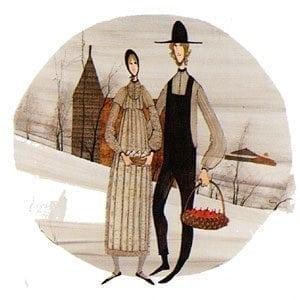
When Pat arrived in the Shenandoah Valley of Virginia in 1964 she became acquainted with the Amish and Old Order Mennonites who lived in the counties surrounding Waynesboro. While the plain people have a long history going back to the Anabaptists, Pat’s highly stylized interpretation of them is both generic and symbolic. The figures do not represent specific individuals, but are used for their visual archetypal value.

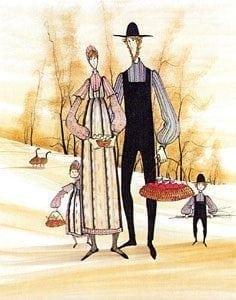
With their strong work ethic, traditional lifestyle and devotion to faith, family and community these plain people became part of her iconography; symbolic “Living Saints,” supplanting earlier Catholic ones. The elongated figures, part of Pat’s unique style, are shown as hard working, faithful, and family oriented. The woman is often depicted holding a basket of eggs or a baby in a basket to represent new life. The man is often shown with a bucket of sticks, a symbol of manhood or fertility, which is a common symbol found throughout art history.

The figures are depicted holding a basket of apples to indicate both a strong work ethic and the ‘fruits’ of labor. The female figures are painted as slightly transparent with the landscape showing through part of her torso. This transparency is used to symbolize the ‘earth mother’ or woman’s intuitive nature.

The Moravian Style House

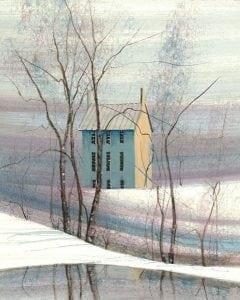
The Moravian Style House, also called the generic house or spirit house, is based on the German style houses from the Moravian period of 1741 to 1844. The Moravian community was founded in Pennsylvania to form a kind of utopia which attempted to bring Christianity to Native Americans while still allowing for cultural expression. Their communal way of life established extraordinary 18th-century industry and hand made crafts which came about through shared cooperative efforts. The Moravian style houses and other communal buildings, including churches, were combined with 18th-century German style architectural elements. These included the use of herringbone pattern doors, high pitched roofs with flared eaves, brick jack-arched windows and doors, tiled roofs, sloping-roofed dormers, and parged stone walls. The deep-set windows represent the largest collection of Germanic style architecture in the United States.
In Pat’s art, the Moravian style house is also referred to as a ‘spirit house’ or ‘generic’ house. The house is often painted without doors or a roof to symbolize a spiritual dwelling, after all a spirit doesn’t need a door or a roof in order to be closer to God. These stylized building are generally painted as a vertical element with long, clean lines. Buildings depicted with doors and a roof are usually realistic representations of an actual place.

Eggs & Apples

Eggs in Moss art signify new life or resurrection. Eggs in art history are often used as symbols of fertility.
Likewise, apples in a basket represent the ‘fruits’ of physical labor or if the figure holding the basket is female it could denote the woman’s ability as a child bearer or archetypal earth mother.


Source: https://www.lva.virginia.gov/public/vawomen/2008/pdf/MossSymbolismandIconographyDocument.pdf

Patricia Buckley Moss (1933- )
Waynesboro, artist and philanthropist

Patricia Buckley Moss uses the considerable commercial success she has earned as an artist to aid child-related charities and promote the use of the arts to help children with learning disabilities succeed in school and in life.

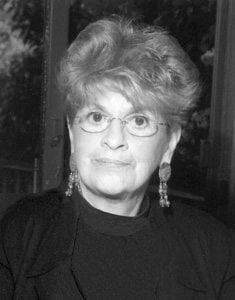
Even though Patricia Buckley Moss (born May 20, 1933) was born in New York City and now divides her time between homes in Florida and Virginia, much of her art is rooted in the Shenandoah Valley. The rural scenery, along with the serenity, work ethos, and traditional pursuits of the Amish and Mennonite communities, had a profound effect on Moss when she moved to Waynesboro with her family in 1964. The modest lifestyle of the Valley inhabitants soon began to appear in her paintings and drawings.

Moss has dyslexia, which made grade school a struggle for her. Later, in high school, her artistic abilities were recognized and nourished, and in 1951 she received a scholarship to New York’s Cooper Union for the Advancement of Science and Art. By late in the 1960s Moss began marketing her work. The P. Buckley Moss Museum opened in Waynesboro in 1989, and today galleries nationwide carry her works.

Moss has been generous with her earnings and focused on child-related charities. In 1985 she helped famine-struck African countries through a Mennonite African relief fund. Since then her generosity has expanded, especially in her efforts to help children with learning disabilities. Collectors of Moss’s works established the P. Buckley Moss Society in 1987 to promote her charitable ideals, and the P. Buckley Moss Foundation for Children’s Education, founded in 1995, supports the arts in educational programs, with a focus on children with special needs. In 1988 journalist Charles Kuralt described Moss as “The People’s Artist,” a compliment she considers the greatest that could be bestowed on her.

Source: http://www.lva.virginia.gov/public/vawomen/2008/honorees.asp?bio=6