
The Heart of Rural America
The Schoolhouse at the Heart of the Community
Before education became a system, the schoolhouse was a gathering place.
There was a certain kind of excitement in the air before the first day of school. New pencils waited in a clean box. Shoes felt a little too stiff. Lunch was packed before breakfast, and a child might walk down a country road wondering who would sit beside them and whether the teacher would be kind. Years later, those tiny details are often what we remember most.
In rural America, the schoolhouse held far more than desks and lessons. It was where children learned their letters, neighbors gathered for programs and meetings, friendships began, and a community imagined what its next generation might become. The building might have been small, but its place in the life of a town was enormous.
This next chapter of The Heart of Rural America celebrates school bells, well-traveled paths, patient teachers, childhood mischief, and the places that taught us how to belong. No pop quiz required.
School Day
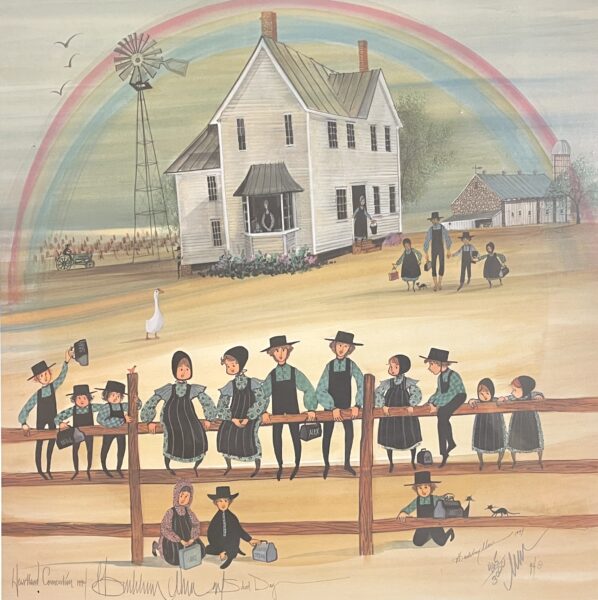
“The first lesson of every school year was learning where we belonged.”
With children gathered outside a country school and a rainbow stretching above the farm landscape, School Day is the natural anchor for this collection. It carries the bright anticipation of a new beginning and the comfort of a community that knows its children by name. On the wall, it speaks of hope, guidance, and the belief that every child deserves a place to learn and be welcomed.
Country School Days Artist Proof
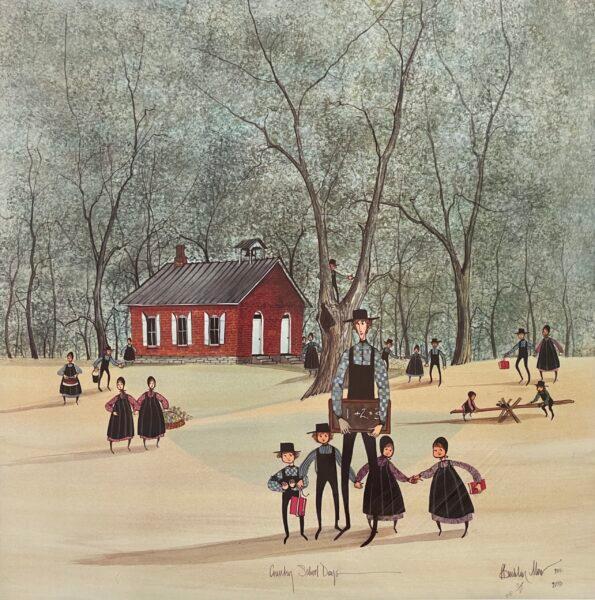
“Reading, writing, arithmetic…and keeping one eye on the lambs.”
This rural school scene brings learning and farm life into the same warm story. Children and lambs recall a childhood when the natural world was never far from the classroom door. The piece evokes innocence, curiosity, and the practical rhythm of growing up close to the land. In a home, it honors the kind of education shaped by books, chores, animals, family, and community all at once.
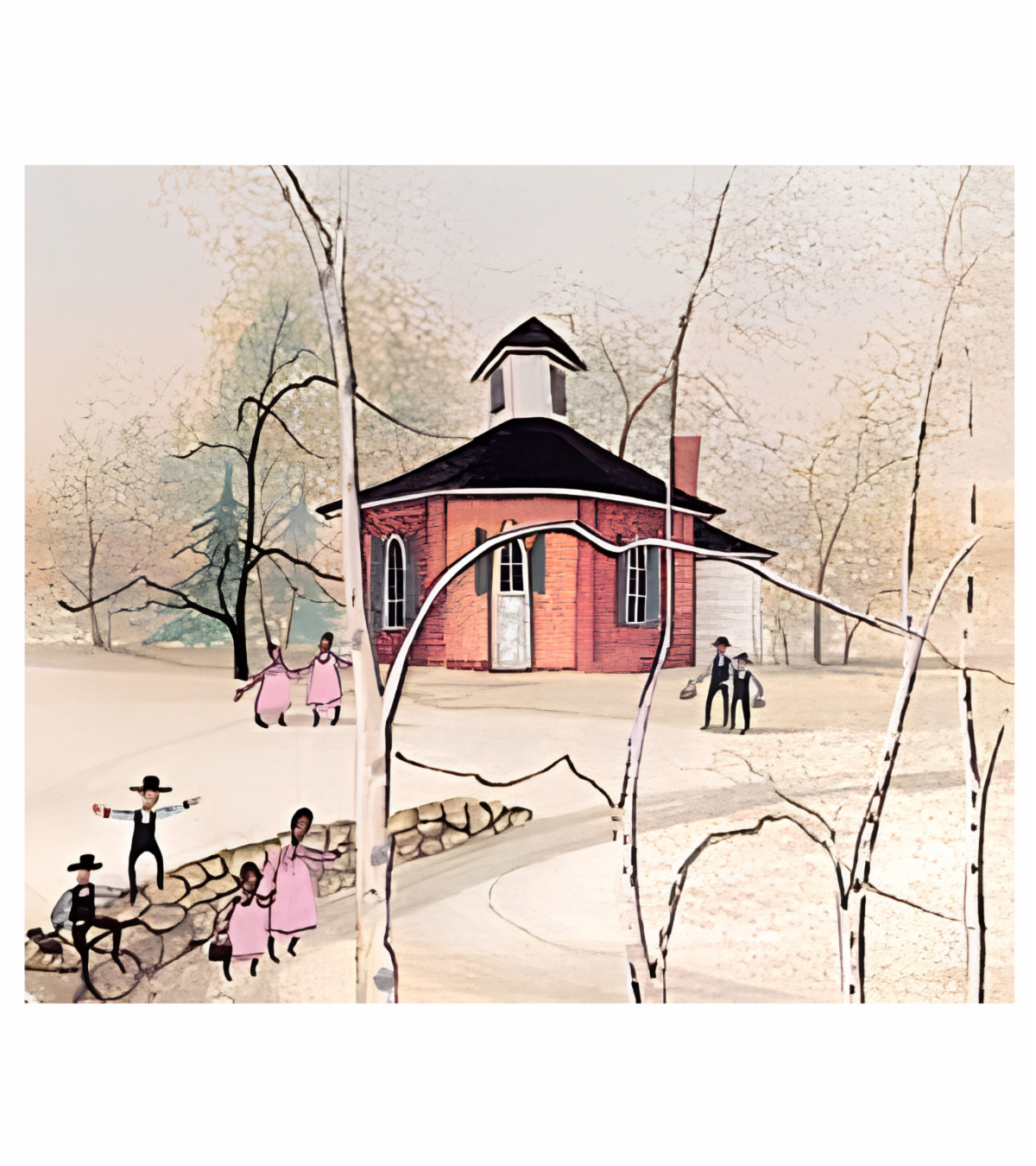
Heartland School
“A little schoolhouse could hold a whole community’s hopes.”
Heartland School says plainly what this collection means: education belonged at the center of community life. A modest school could become the place where children discovered a wider world without losing their connection to home. This artwork evokes trust, roots, and possibility. Displayed in a family room, library, or study, it suggests that progress begins when a community chooses to invest in its children.
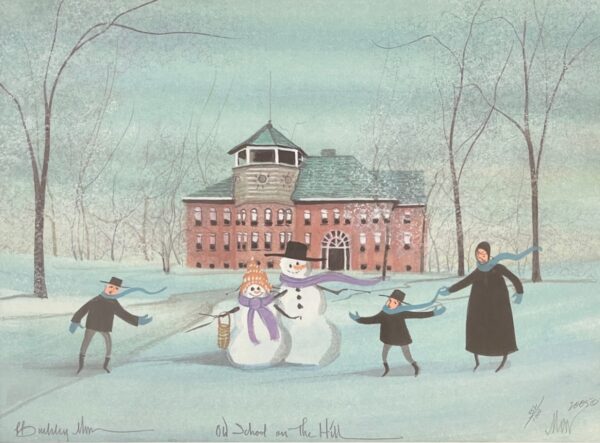
Old School on the Hill
“The walk uphill always felt longer on Monday morning.”
Every town seemed to have a building known by where it stood: the church by the crossroads, the mill beside the stream, the school on the hill. This work carries the feeling of a familiar destination seen from a distance, filled with equal parts duty and promise. It brings remembrance into the home and honors the humble places that can become permanent landmarks in a child’s memory.
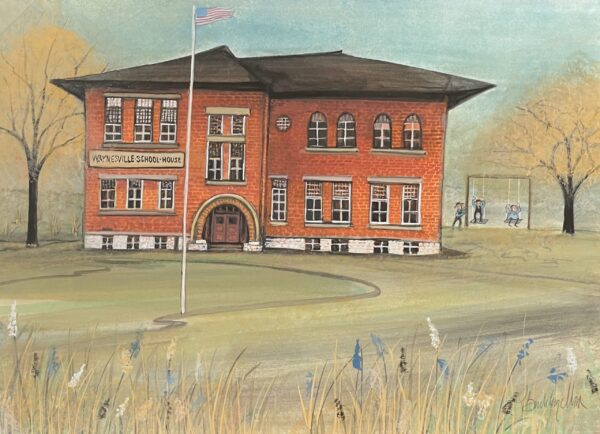
The Old School House
“Some lessons fade. The room where we learned them never quite does.”
An old schoolhouse can awaken memories even in someone who never entered its doors. Its simple form represents first readers, chalkboards, recitations, friendships, and the patient work of learning. The painting evokes heritage and continuity, giving a home the quiet message that knowledge is part of what one generation builds and hands to the next.
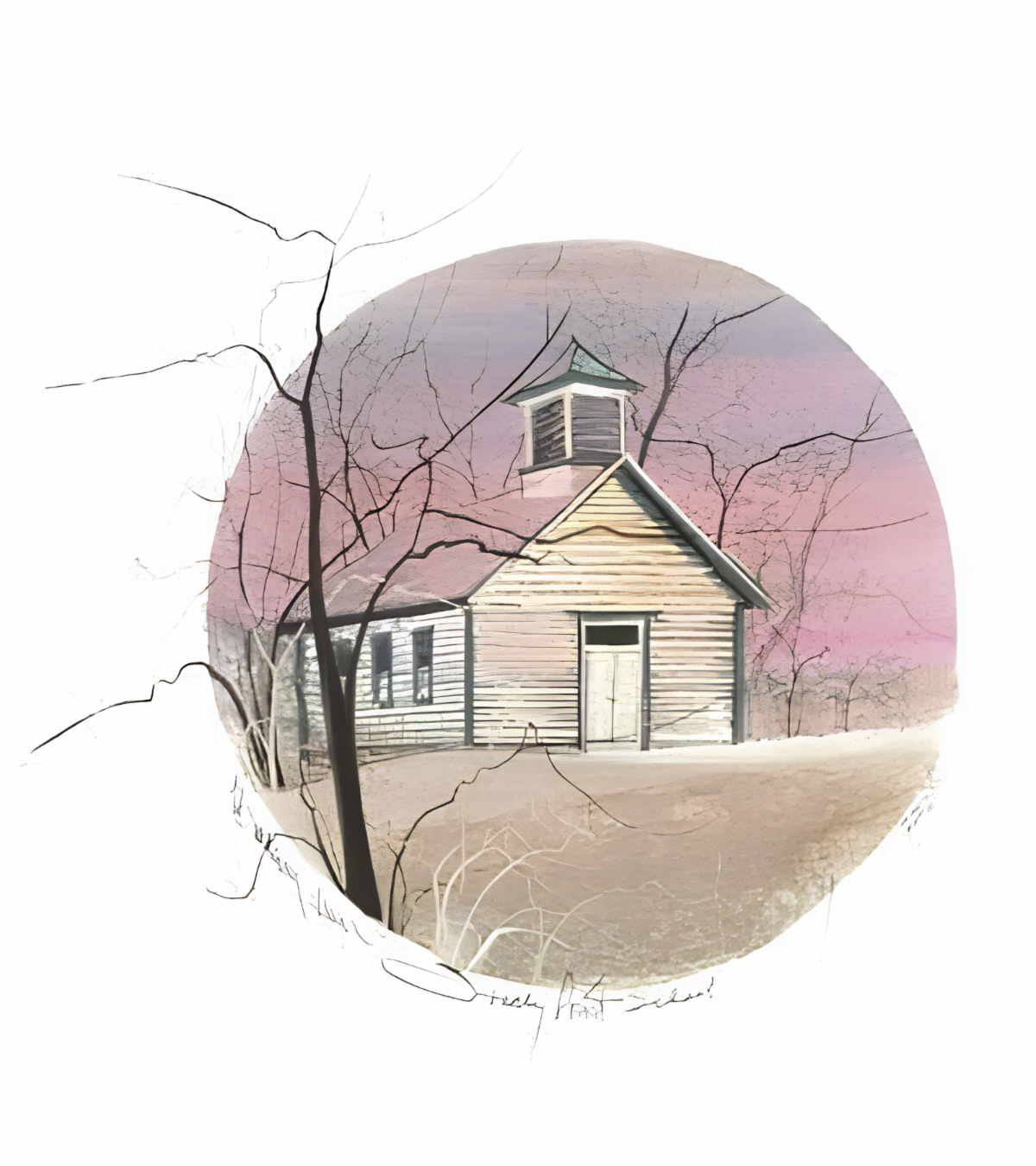
Stoney Point School
“The bell called the children to class and the neighbors to one another.”
A named school becomes part of a place’s identity. Stoney Point School feels rooted in a particular community, carrying the history of the families who passed through it and the teachers who helped shape them. The work evokes belonging and local pride. On a wall, it honors the idea that a community’s story is preserved not only in grand monuments, but in the everyday buildings people shared.
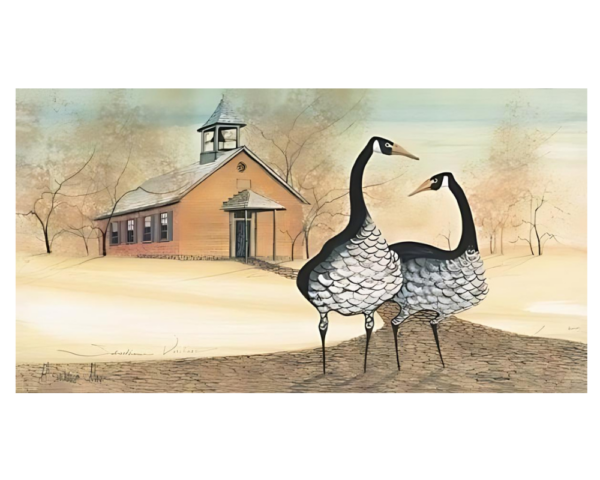
Schoolhouse Visitors
“Not every visitor remembered to raise a wing before speaking.”
Geese bring a touch of humor and life to the schoolhouse landscape, reminding us that a rural classroom was always part of the wider natural world. The scene blends learning, place, and wildlife with Moss’s gentle storytelling. It evokes curiosity, calm, and affection for the unexpected visitors that make an ordinary school day memorable.
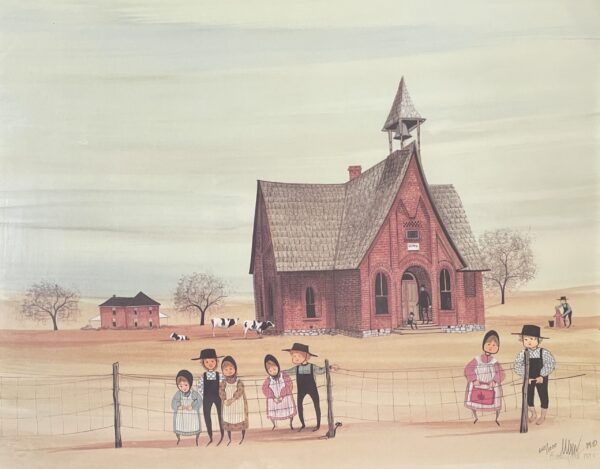
Route 9 Indiana
“The road to school had traffic, although some of it had four legs.”
Children, school, cattle, and a familiar Indiana route come together in a portrait of learning woven into working rural life. The journey matters here as much as the destination. This artwork evokes adventure, independence, and memories of a childhood measured in roads walked and landmarks passed. In a home, it celebrates a sense of place and the stories hidden along ordinary routes.
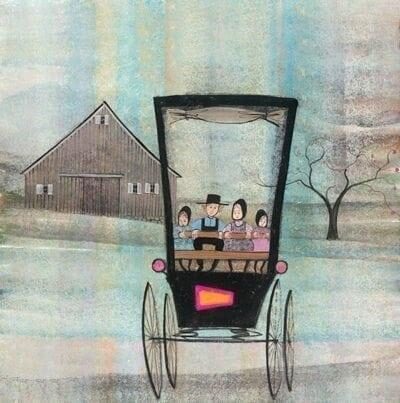
Ride to School
“Getting there was half the education and most of the adventure.”
Ride to School captures the journey before the lesson begins, when transportation itself could become part of the day’s story. The piece connects children, movement, and rural ingenuity with a sense of cheerful purpose. It evokes freedom, friendship, and the small adventures that later become family stories told again and again.
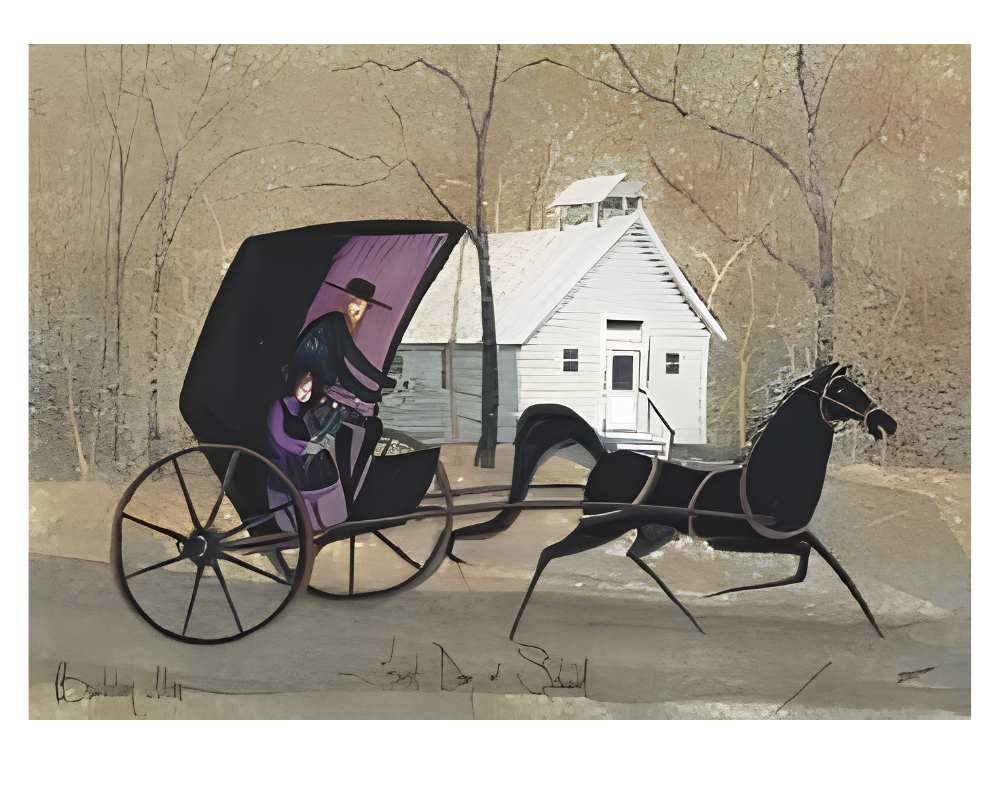
First Day of School
“A brave face, a packed lunch, and one last look back toward home.”
The first day of school is a tiny act of courage for both child and parent. With its rural setting and horse, this artwork places that universal milestone firmly within the life of the countryside. It evokes tenderness, anticipation, and the moment a child takes one more step into the wider world. On the wall, it speaks to new beginnings and the loving roots that make them possible.